Friday, July 14, 2006

Benefits of using biogas

What is biogas.

Biogas originates from bacteria in the process of bio-degradation of organic material under anaerobic (without air) conditions. In the absence of oxygen, anaerobic bacteria decompose organic matter and produce a gas mainly composed of methane (60%) and carbon dioxide called biogas. This gas can be compared to natural gas which is 99% methane.

Biogas collected can be used directly to power a cooking stove or as energy source for generators, boilers, burners, dryers or any equipment using propane, gas or diesel.

Biogas and the global carbon cycle.
Each year some 590-880 million tons of methane are released worldwide into the atmosphere through microbial activity. About 90% of the emitted methane derives from biogenic sources, i.e. from the decomposition of biomass. The remainder is of fossil origin (e.g. petrochemical processes). In the northern hemisphere, the present tropospheric methane concentration amounts to about 1.65 ppm(parts per million).

Unlike fossil fuel combustion, biogas production from biomass is considered CO2 neutral and therefore does not emit additional Greenhouse Gases (GHG) into the atmosphere.

However, if biogas is not recovered properly, it will contribute to a GHG effect 20 times worst than if methane is simply combusted. Therefore, there is a real incentive to transfer biogas combustion energy into heat and/or electricity.

Finally, biogas production from anaerobic digester presents the additional advantage of treating organic waste and reducing the environmental impact of these wastes. It contributes to a better image of the farming community while reducing odor, pathogens and weeds from the manure and producing an enhance fertilizer easily assimilated by plants.

The Benefits of Biogas :

A Polythene Biogas unit can yield a whole range of benefits for their users, the society and the environment in general, the chief benefits being;

1. Production of energy (heat, light, electricity).
2. Transformation of organic wastes into high quality fertilizer.
3. Improvement of hygienic conditions through reduction of pathogens, worm eggs and flies.
4. Reduction of workload, mainly for women, in firewood collection and cooking.
5. Environmental advantages through protection of forests, soil, water and air.
6. Global Environmental Benefits of Biogas Technology.


Saturday, April 29, 2006

Road to Dukura range.


The road to Chandanchaturi village in dukura range, similipal. There is about 20 Km of country road after the link road that has to be traversed to reach the site.
With the beneficiary after the installation of the second biogas unit. Posted by Picasa

Fixing the safety valve

The gas pressure safety valve is being fixed and the process is explained to the beneficiary. Posted by Picasa

After the installations

The beneficiary, his family and the onlookers after the installation of the PBG unit. Posted by Picasa

Gas Connections

The gas pipe brings the gas from the digester to the kitchen. Most of the gas wil be used for cooking. However, when the gas is not being used, it is stored inside th kitchen to be used later. Posted by Picasa

First exposure to a gas stove


This was the first time the beneficiary had seen a gas stove. All her life she has been cooking on firewood "chulhas". At first, she was worried as she thought that this is an electric stove and wanted to know where the wires would be fitted. After we demostrated the functioning of the stove and explained to her that it runs on gas created by cowdung, she was all smiles.
Although it will take some time before the full gas pressure forms for optimal usage..we were very happy that the process had begun.
Posted by Picasa

WWF & Greenpower

Michael Peters (WWF-Orissa) and Chandan( Greenpower) explain the benefits and the methods for utilizing the manure from the digester as a fertilizer. Posted by Picasa

Backyard of the beneficiary

The picture shows the biogas digester installed in the backyard and the window of the kitchen where the burner is installed. The distance between the digester and the kitchen is around 50 feet. In the background are the Similipal hills. Posted by Picasa

Fixing the gas connection

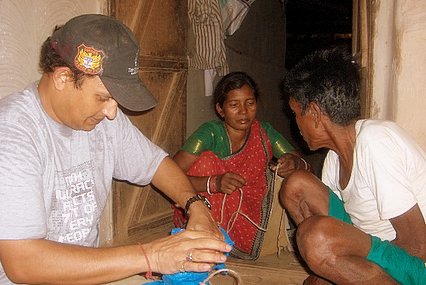
Chandan, from Greenpower India fixes the connections for the gas pipeline, & the beneficiaries help him out. Posted by Picasa

Mass fishing !

Mass fishing underway at a village near Chandanchaturi. Each guy pays less than half a dollar and can fish for a stipulated time. By the time this is over, the small pond is fished clean of anything that is edible ! Posted by Picasa

Outlet of the digester

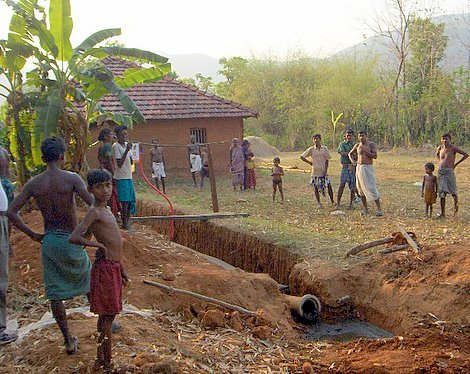
This is the outlet of the digester. The manure that comes out is a good quality organic fertilizer and brings additional benefit to the beneficiary, apart from the biogas which is used as fuel. Posted by Picasa

Biogas digester.

Polythene biogas digester installed at Chandanchaturi village in Orissa. These biogas units are 10m long and 1m in diameter. The gas that is produced here(methane) is transported to the kitchen of the beneficiary, where it is stored in a polythene reservoir. This facilitates the use of gas as fuel anytime during the day or night. Posted by Picasa

Friday, December 30, 2005

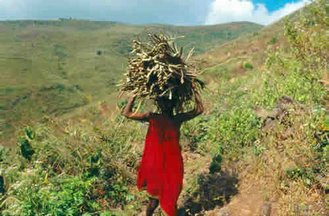
A women carries her daily requirement of firewood from the similipal hills. This dependence can be reduced by providing them with alternative green fuel solutions like the bio gas system. Posted by Picasa
This is a tribal kitchen supplied with biogas. The biogas is produced by the polythene bio gas digester installed outside their kitchen. The biogas digester is supplied with animal manure that the beneficiary collects from his livestock. Biogas is a clean, green fuel. It improves the health of people using it as it does not produce smoke or soot. It also reduces the greenhouse effect by digesting the manure in an anaerobic(without oxygen) condition. The by-product of the bio gas unit is very high quality fertilizer, which is used by the locals to suppliment their farming needs. Posted by Picasa
A typical kitchen in a tribal household. Conventional kitchens use firewood for cooking which produce lot of smoke and soot. It directly affects the lungs and the eyes of people in the kitchen. Women and the children are the worst affected, as they spend most of the time in the vicinity of the kitchen. It also increases the greenhouse effect on the global level, and depletes the forest resources, as the firewood comes from the adjoining forest. Posted by Picasa
A fully functional polythene gas unit. The roofing is provided by local tribal beneficiary using local material. The fencing is made by bamboo sticks which also support the roof. Posted by Picasa

Wednesday, December 21, 2005

Road to Chandanchaturi
 Posted by Picasa

Unit 2

Installation of polythene biogas digester at the second beneficiaries site.
 Posted by Picasa

Beneficiaries of Unit 1

I ask not for a lighter burden, but for broader shoulders.
 Posted by Picasa